
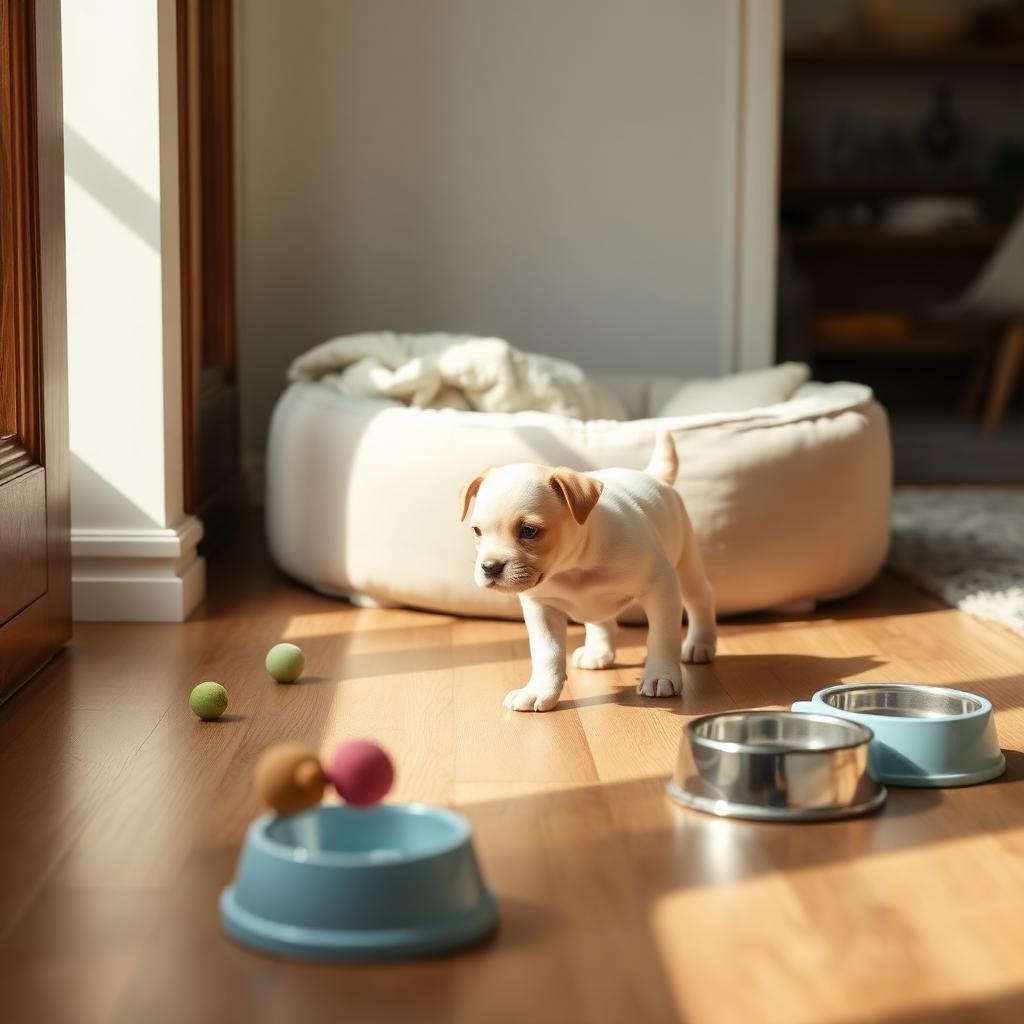
New puppy
Your New Puppy's First Week in Singapore: A Practical Guide for HDB and Condo Homes
3 Jun 2026 12 min read
The first week with a new puppy comes down to three things: keep them safe, keep them calm, and get the admin done before life gets busy. Here it is in order, from shopping before pickup to the AVS licence and the signs that mean "call the vet now", with a printable checklist at the end.
Furgive You SG (Furgive You Pte Ltd, UEN 202407996H) is an AVS-licensed puppy shop (Licence AS24C00019) at 278 East Coast Road, Singapore 428944, open Tuesday to Sunday, 12pm–6pm, by appointment, and closed on Mondays. Our puppies are imported; we do not breed locally. The advice below is general. Your own vet's advice always comes first.
Things to buy before pickup
Buy the basics a few days ahead.
- A secure carrier or travel crate for the ride home and vet visits.
- A playpen or crate, for a small, safe "home base".
- Washable bedding. Puppies chew, so hold off on the expensive bed.
- Pee pads or a tray, plus an enzyme cleaner. Ordinary cleaners leave a smell that draws the puppy back to the same spot.
- Heavy food and water bowls that do not tip easily.
- The same food the puppy is already eating. Our starter kit includes a bag of puppy kibble. If you want to buy more of the same food in advance, ask us on WhatsApp what your puppy is eating now.
- A collar or harness, sized for a puppy. Our starter kit includes a training leash.
- Safe chew toys in a few textures.
- A soft brush and small training treats.
Then puppy-proof: cover cables, move plants and anything toxic out of reach, put away small objects, and block gaps behind the sofa and fridge. Check every window and the service yard. AVS's licensing requirements say owners must stop their dog from being exposed to the risk of falling from height, for example by meshing windows. In a high-rise flat, take that seriously from day one.
What we give you at collection: a starter kit with a bag of puppy kibble and a training leash, plus your puppy's vaccination card and vet health certificate (and a pedigree certificate with certain dogs). Nothing else is included, so buy the rest of this list yourself. See what's included with your puppy.
The car ride home
- Bring a second person so one of you can drive while the other stays with the puppy.
- Keep the puppy in the carrier, secured so it cannot slide, with a towel inside in case of travel sickness or accidents.
- Skip a big meal right before the trip. An empty-ish tummy means less chance of carsickness.
- Keep the car cool and quiet. Do not pass the puppy around.
- Never leave the puppy alone in the car, even for a minute. Cars heat up very quickly here.
- Taking a private-hire car or taxi? Book a pet-friendly option and check its carrier rules before collection day.
We'll walk you through collection on WhatsApp.
The first 48 hours
Your puppy has just left everything they know. Aim for calm and boring.
- Go straight to the toilet spot when you get home, and praise quietly if they go.
- Start in one room. Let them explore the home base first; open up more of the flat over the coming days.
- Keep visitors to the household. The relatives can meet the puppy next weekend.
- Expect lots of sleep and a small appetite. Many puppies eat little on the first day. Keep offering their usual food at the usual times.
- Supervise children. Teach them to sit on the floor and let the puppy come to them.
- Hold off on a bath unless your vet says otherwise. A stressed puppy does not need one more new thing.
For the full list of what comes home with your puppy, see what's included.
Sleep
AVS's dog-care page notes that adult dogs sleep 12–14 hours a day and puppies need even more, and that overstimulation can be as much of a problem as boredom. If your puppy falls asleep mid-play, let them.
- Put the crate or pen in your bedroom for the first nights. A puppy who can hear and smell you usually settles faster.
- Plan for a night-time toilet trip at first. Keep it quiet and dull: out, toilet, praise, back to bed.
- Crying is normal in the first few nights. Comfort calmly, and ask your vet or a trainer if it is not easing by the end of the week.
Feeding transition
AVS advises a complete and balanced diet for the dog's life stage, with fresh water always available, and flags real risks with unbalanced home-cooked and raw diets.
- Keep the same food, amounts and meal times for the first week or so. A new home is enough change for a puppy's stomach.
- Switch gradually if you want to change food, mixing a little more of the new food in over several days. Ask your vet for a plan, and slow down if stools loosen.
- Water at all times, in a heavy bowl. Top it up often on hot days.
- No milk, no table scraps. Never give cooked bones, chocolate, grapes or raisins, onions or garlic, or anything sweetened with xylitol.
Toilet training in an HDB flat or condo
Most Singapore puppies learn indoors first, on a pad or tray, because they should not walk on public ground until your vet says so.
- Pick one spot and stick to it: the service yard, a bathroom corner or a balcony that is fully meshed. Keep it away from the food bowl and the bed.
- Go there at the predictable times: on waking, after meals, after play and before bed. Young puppies need to go often.
- Reward straight away, within a second or two, with calm praise and a small treat.
- Do not punish accidents. Clean up and supervise more closely. Scolding teaches a puppy to hide, not to hold it.
- Watch for the signs: sniffing the floor, circling, or suddenly wandering off.
- Mind the common areas. Carry your puppy through lifts and corridors at first, and condo owners should check MCST by-laws on pets in lifts. Once walking, AVS requires dogs to be leashed and under control in public.
The first vet visit
Book your first vet appointment before you collect the puppy, for the first few days at home.
Every puppy from us comes with a 48-hour health guarantee. It covers certain specified genetic diseases where a certified vet declares the puppy unfit to be sold. It is subject to terms; ask us for the full conditions.
Bring:
- your puppy's vaccination card
- your puppy's vet health certificate
- a list of questions
Every puppy from us is microchipped, dewormed before collection and has had a minimum of 2 and up to 4 vaccinations, depending on age at collection. You take home the vaccination card and vet health certificate. Pedigree certificates come only with certain dogs. The parents' DNA reports are shown in the shop and are not handed over.
Ask your vet about:
- a general health check and weight
- scanning the microchip and checking the number matches your records
- the next vaccinations and when they are due
- deworming and parasite prevention suited to Singapore
- when your puppy can safely walk outside and meet other dogs
- sterilisation timing, and pet insurance if you are considering it
The AVS dog licence
AVS's licensing requirements page says that under the Animals and Birds (Licensing and Control of Cats and Dogs) Rules 2024, all dogs must be licensed. The licence is in the owner's name; our shop licence (AS24C00019) covers our business, not your dog.
We transfer your puppy's AVS dog licence to you. AVS's licensing page explains how a change of licensee works:
- The current licensee starts the transfer on PALS, AVS's Pet Animal Licensing System, with the new owner's name, mobile number and email.
- You accept the transfer on PALS when AVS notifies you.
- Renew on PALS when the licence is due. AVS allows renewal up to 8 weeks before expiry; check current fees on AVS's site.
If you are a first-time owner, AVS's free online Pet Ownership Course takes about 20–30 minutes and is a useful primer.
Three things worth knowing:
- A licence is not permission to keep the dog at your address. AVS says it is your responsibility to check that HDB or your estate management allows the dog.
- Moving house? AVS asks you to update the address on PALS within 28 days.
- In an HDB flat, HDB's rules allow one dog per flat, and it must be a breed named in the Schedule (or a cross of two named breeds). It is a named list, not a weight test. Read HDB's Keeping Pets page and AVS's limits of ownership, and see our HDB breeds guide.
Our dog licence guide goes into more detail.
Heat and humidity
Singapore is hot all year, and puppies cannot cool themselves well. AVS counts dogs with thick double coats, and flat-faced breeds, among those that need extra care in the heat.
- Keep the home base out of direct sun, with a fan or air-conditioning on hot afternoons.
- Keep water down at all times.
- When your vet clears outdoor walks, go early in the morning or after dark. Test the pavement with the back of your hand.
- Dry the coat fully after baths and rain. Damp fur in humid weather is asking for skin trouble.
- Never leave your puppy in a car.
Socialisation timing
The early weeks are when puppies learn what "normal" looks like, but they are not fully protected until their vaccinations are done. The usual balance is safe exposure before full freedom:
- Carry your puppy to see the void deck, lifts, buses passing and people in hats and helmets.
- Let calm, healthy, vaccinated dogs you know meet your puppy at home, if your vet agrees.
- Get your puppy used to being handled all over: paws, ears, mouth and a gentle brush.
- Keep every new experience short and pair it with a treat.
Your vet will tell you when your puppy can go on public ground, to dog runs and to group classes. Follow their timing, not a blog's. Our puppy socialisation guide has more ideas for safe early outings.
When to call the vet
AVS advises prompt veterinary attention for signs such as vomiting, diarrhoea, changes in appetite, lethargy, breathing difficulties or sudden behaviour changes. Puppies are small, and things can change fast. Call your vet the same day, or go to a 24-hour clinic, if your puppy:
- vomits more than once, or has diarrhoea that keeps going, especially with blood
- will not eat or drink, or is unusually flat and sleepy
- has pale gums, laboured breathing or a swollen tummy
- may have eaten something toxic, such as medicine, chocolate, grapes or xylitol
- shows signs of heat stress: heavy panting, drooling, weakness, wobbliness or collapse
- has a fall, an injury, or seems in pain
Save your vet's number, and the nearest 24-hour clinic's, in your phone before pickup.
For non-urgent questions after collection, WhatsApp us on +65 8767 4515. Every puppy comes with lifetime aftercare support via WhatsApp.
Printable first-week checklist
Before pickup
- Carrier, playpen or crate, washable bedding
- Pee pads or tray, enzyme cleaner
- Heavy bowls; more of the same food, if needed
- Collar or harness, chew toys, soft brush, treats
- Windows and service yard meshed; cables and toxins out of reach
- HDB Schedule or MCST by-laws checked for your breed
- Vet appointment booked; 24-hour clinic number saved
- AVS Pet Ownership Course (useful for first-time owners)
Collection day
- Vaccination card and vet health certificate collected (plus pedigree certificate, if your puppy comes with one); starter kit in the car
- Second person for the ride; carrier secured
- Straight to the toilet spot on arrival
Days 1–2
- One room only; visitors kept to the household
- Same food, same times; water always out
- Crate or pen in the bedroom at night
Days 3–7
- First vet visit; next vaccination date noted
- AVS licence transfer accepted on PALS
- Short alone-time practice
- One short, safe new experience a day
- Watch appetite, stools, energy and breathing
FAQs
How soon should I take my new puppy to the vet?
Book it before pickup, for the first few days at home, and bring your puppy's vaccination card and vet health certificate.
Do I need an AVS licence if I bought from a licensed shop?
Yes. The shop's licence covers the shop. Your dog needs its own licence in your name. When you buy from us, we transfer your puppy's AVS dog licence to you, and you accept the transfer on PALS.
Can I toilet train a puppy in an HDB flat?
Yes. Most Singapore puppies start on a pad or tray in one fixed spot, such as the service yard or bathroom. Take them there after sleeping, eating and play, and reward straight away.
When can my puppy go outside for walks?
When your vet says so, usually after the vaccination course. Until then, carry them out for safe sights and sounds.
What if my puppy will not eat on the first day?
A small appetite on day one is common. Keep offering the usual food at the usual times. Call your vet if it continues or your puppy seems unwell.
Still choosing your puppy?
If you are planning ahead, see how we help families buy a puppy in Singapore, browse the puppies available now and read how it works. Then WhatsApp +65 8767 4515 to book a visit at 278 East Coast Road, Singapore 428944 (Tue–Sun, 12pm–6pm, by appointment; closed Mondays). Tell us about your home and routine, and we will talk you through the first week before you take your puppy home.
Looking for a puppy after reading this?
These are the breeds this guide applies to — see who is available at our East Coast Road showroom right now.