
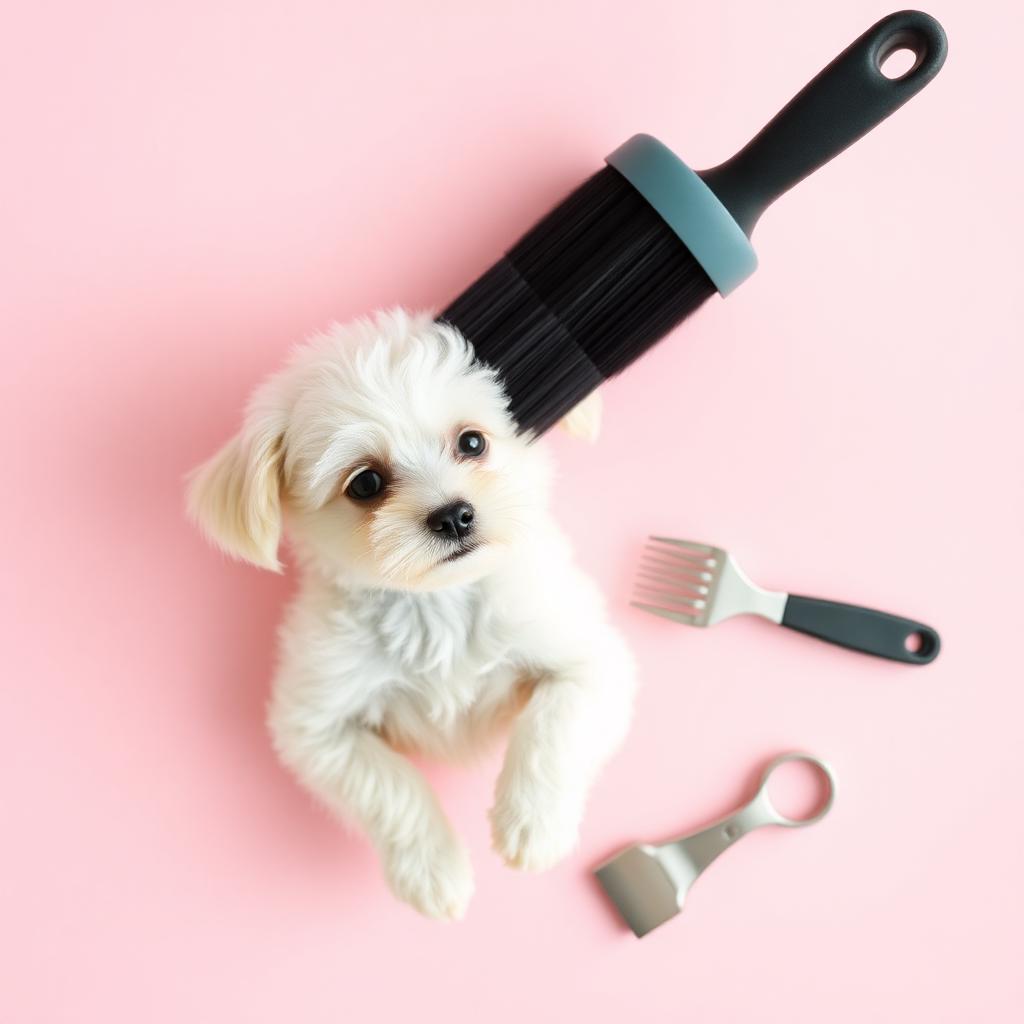
Grooming
Grooming Basics for Toy Breeds: Poodles, Maltese & Bichons
21 Apr 2026 5 min read
Little coats, big responsibilities. A quick-start grooming routine to keep your small breed puppy comfortable between salon visits.
Why toy breed coats need constant attention
Toy Poodles, Maltese, Bichon Frises, Maltipoos, Cavapoos and Havanese all share a beautiful but demanding trait: their coats grow continuously rather than shedding seasonally. Left alone for a month, that coat mats — and matting isn't cosmetic. Tight mats trap moisture against the skin, cause painful pulling, and in Singapore's humidity can become a hot-spot infection within days. The single best thing you can do for a toy breed puppy is set up a five-minute daily grooming ritual from the day they come home.
Your starter kit
You don't need much. A small slicker brush ($15–$25), a metal comb with fine and coarse ends ($10), a pair of blunt-tipped scissors, styptic powder for nails, a gentle puppy-safe shampoo, and cotton pads for ears. Skip the fancy dryers and electric clippers for now — those are for the groomer.
The five-minute daily brush
Sit your puppy on a non-slip mat on a table or your lap. Work in sections: legs, chest, belly, back, tail, head. Use the slicker brush first to lift the coat, then follow with the comb to catch any hidden knots. Behind the ears, under the front legs and around the collar are the classic mat zones — spend extra time there.
If you find a mat, don't yank at it. Hold the base of the hair close to the skin so you're not pulling, then gently tease the mat apart with the tip of the comb. If it won't budge in 30 seconds, leave it for your groomer. Never scissor a mat off yourself — the skin often comes with it.
Bath routine
In Singapore's climate, most toy breeds benefit from a bath every two to three weeks. Any longer and skin oils build up; any more frequent and you'll strip the coat. Wet the coat thoroughly, work in a small amount of puppy shampoo, and rinse for twice as long as you think you need to — leftover shampoo is the leading cause of itchy puppies. Towel dry, then blow-dry on the lowest, coolest setting while brushing. Air-drying a toy breed coat in humid weather is a fast track to mats and fungal skin infections.
Ears, eyes and paws
Toy breeds with floppy or hairy ears (Maltese, Poodles, Cavapoos) need weekly ear checks. Wipe the visible part of the ear with a cotton pad and a drop of ear cleaner. If you smell yeast or see brown discharge, book a vet — never poke deeper than you can see.
White-faced breeds like Maltese and Bichons often develop tear staining. Wipe the fur under the eyes daily with a damp cotton pad. Feeding filtered water instead of tap water often helps in Singapore.
Trim nails every two to three weeks. Take just the tip — if the nail is dark and you can't see the quick, trim tiny slivers at a time. A drop of blood on a nail is not an emergency; a pinch of styptic powder stops it in seconds.
How often to visit the salon
Every four to six weeks is the sweet spot for most toy breeds in Singapore. Any longer and you'll be paying extra dematting fees; any shorter and you'll be spending unnecessarily. Ask for a 'puppy cut' or 'teddy bear cut' at half an inch to an inch — practical for our climate and forgiving between visits.
Book the first grooming appointment for around 12 weeks old. The goal isn't a haircut; it's a positive introduction to the salon so your puppy learns that grooming is normal, not scary. A good groomer will just bath, blow-dry and lightly trim on the first visit.
The one habit that saves the most money
Brush every single day. Two minutes at breakfast is enough. The owners who do this never pay dematting fees, never deal with hot spots, and have dogs who genuinely enjoy grooming for their whole lives. If you skip a week — completely normal for a busy family — just take slightly longer next time and don't panic.
Coat problems the Singapore climate causes
Our heat and humidity create a small set of predictable coat problems in toy breeds, and knowing what to look for saves a lot of stress. Hot spots are red, wet, itchy patches that appear seemingly overnight — usually where sweat and moisture get trapped, like under a collar or behind the ears. If you spot one, clip the surrounding hair short with blunt scissors, keep the area dry, and see a vet if it doesn't calm within 48 hours. Yeast infections in skin folds and between paw pads smell distinctly like corn chips; a medicated shampoo from your vet clears them quickly if caught early.
Tear staining on white-faced breeds is largely a plumbing issue rather than a hygiene one — puppy tear ducts are still maturing, and staining usually reduces on its own by six to eight months. In the meantime, wipe daily with cool water and a soft cotton pad, and consider switching to a stainless-steel or ceramic water bowl (plastic bowls harbour bacteria that worsen staining). Avoid over-the-counter tear stain removers containing tylosin — long-term antibiotic use is unnecessary for a cosmetic issue.
Finally, in the hotter months, watch for pad burns on hot pavements. If you can't hold the back of your hand on the concrete for ten seconds, it's too hot for your puppy's paws. Walk on grass, or shift walks to before 8am and after 7pm.
Choosing a good groomer in Singapore
A good groomer is worth their weight in gold; a bad one can traumatise a puppy in a single visit. Look for salons that use hand-drying rather than cage dryers, that let you drop in for a 'meet and greet' first, and that are transparent about how they handle a nervous puppy. Read Google reviews carefully — pay attention to reviews from owners of your specific breed, because grooming a Poodle is very different from grooming a Bichon. Expect to pay $60–$120 for a toy breed full groom in Singapore, more for heavily matted coats or specialty cuts.
Book your groomer's next appointment as you leave each one. Toy breeds that are groomed on a strict four-to-six week cycle stay in better coat, cost less per visit, and are far calmer at the salon than dogs who only turn up when they've become a matted mess.
Ready to meet your puppy?
Every Furgive You puppy is ethically imported from Australia, the UK, Ireland or New Zealand — vet-checked, vaccinated and AVS-microchipped before they come home.
Looking for a puppy after reading this?
These are the breeds this guide applies to — see who is available at our East Coast Road showroom right now.