
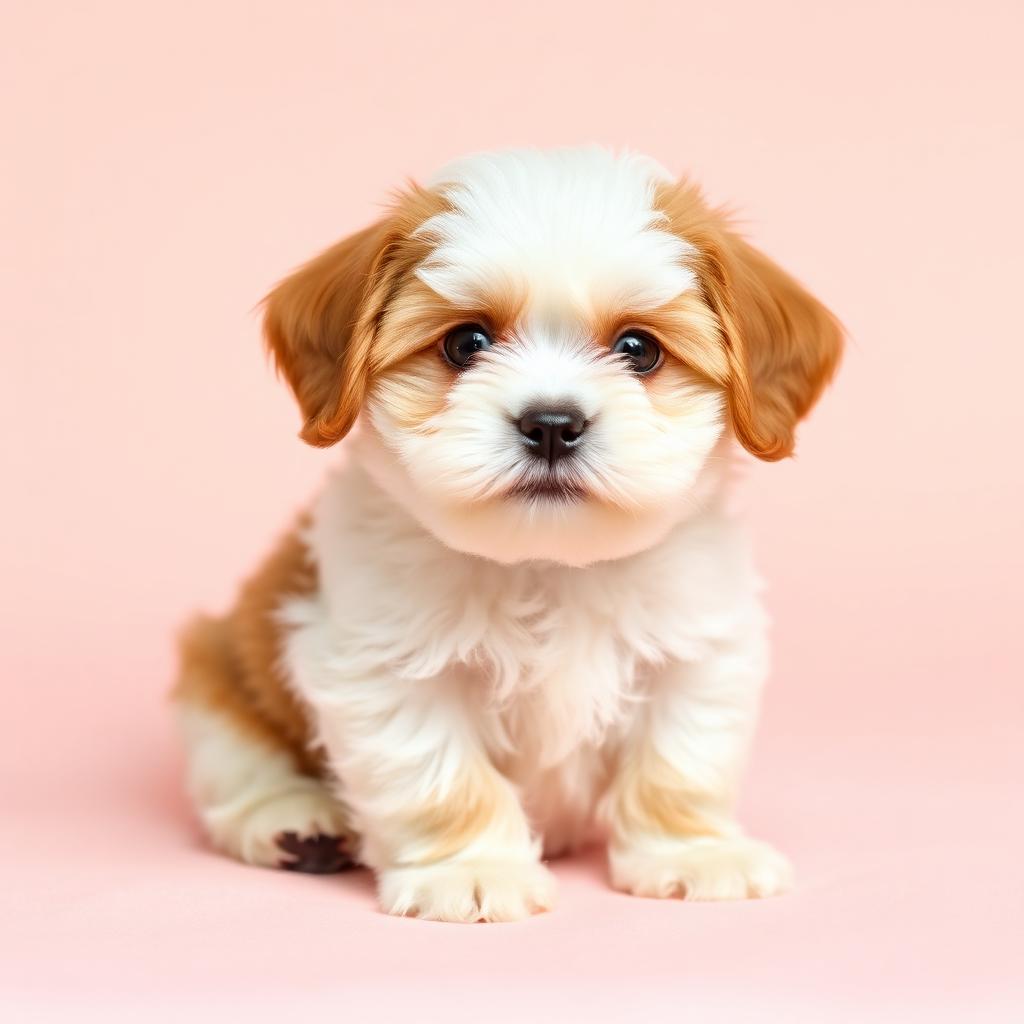
Grooming
When Do Cavachons Lose Their Puppy Coat?
11 Aug 2026 6 min read
The coat change usually starts around six months. Here's what to expect, why matting spikes during the transition, and how to groom through it.
The short answer: around six to twelve months
Most Cavachons begin losing their soft puppy coat between six and ten months, and the change is usually complete by twelve to fourteen months. Some individuals start as early as five months and a few take until eighteen months, particularly those with a heavier Bichon-type coat.
The transition is gradual rather than a single dramatic shed. You will notice more loose hair on the brush, a slight change in texture near the roots, and — the giveaway — a sudden increase in matting even though your brushing routine has not changed.
What changes in the coat
The puppy coat is fine, soft and single-textured. The adult Cavachon coat is denser, often wavier or curlier depending on how much Bichon influence the individual inherited, and it holds its shape better after grooming. Colour frequently changes too: many Cavachons lighten noticeably, with apricot and ruby markings fading towards cream or blond.
Cavachons are low-shedding rather than non-shedding. During the coat change, hair that would otherwise fall out gets trapped in the growing adult coat instead, which is exactly why mats appear so quickly during this window.
Grooming through the transition
Increase brushing to daily during the coat change, using a slicker brush followed by a metal comb. The comb is the test: if it cannot pass cleanly from skin to tip, the area is matted even if the surface looks fine. Focus on behind the ears, the collar area, the armpits, the belly and the back legs.
Line-brush rather than surface-brush — part the coat in horizontal sections and work from the skin outwards. Five focused minutes a day beats a stressful half-hour on Sunday.
Book professional grooming every four to six weeks during this period. Tell your groomer the coat is transitioning; many will recommend a slightly shorter trim for a few months, which is far kinder than a shave-down after mats become tight.
Singapore humidity makes it harder
Humidity swells the hair shaft and encourages mats to tighten. After every bath or wet walk, dry the coat completely to the skin with a dryer on a cool or warm setting — never leave a Cavachon to air-dry, which is the fastest route to matting and to damp skin problems.
Rinse after beach or pool visits, keep ears dry and check them weekly, and avoid leaving a damp harness on. If you spot red, itchy or smelly patches under the coat, see your vet rather than trimming around them.
When to worry
Normal coat change is diffuse thinning and texture change. Concerning signs are bald patches, symmetrical hair loss, flaky or crusted skin, constant scratching, or a sudden dull, brittle coat — these point to allergies, parasites or a hormonal issue rather than a normal transition.
Diet supports coat quality: a complete food with good omega-3 and omega-6 levels helps, and your vet can advise on a fish oil supplement if the coat looks dull. Do not add supplements at high doses without veterinary guidance.
If you are unsure whether what you are seeing is normal, bring your Cavachon by our East Coast Road showroom — we are happy to take a look and point you to a groomer or vet if needed.
Ready to meet your puppy?
Every Furgive You puppy is ethically imported from Australia, the UK, Ireland or New Zealand — vet-checked, vaccinated and AVS-microchipped before they come home.
Looking for a puppy after reading this?
These are the breeds this guide applies to — see who is available at our East Coast Road showroom right now.